
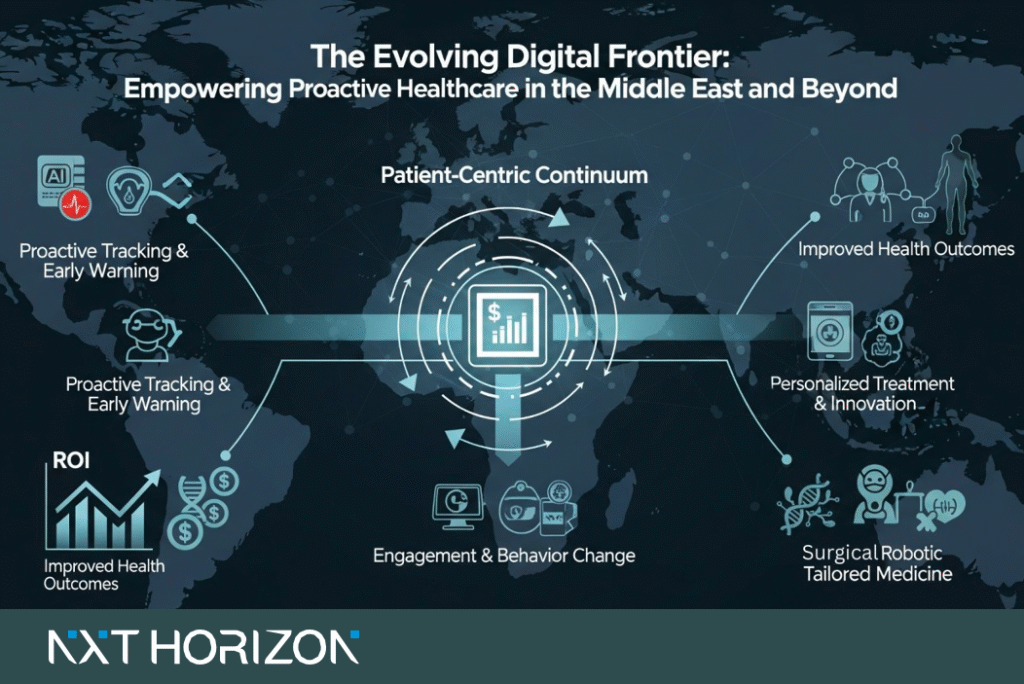
The Medical Fortune Teller: Digital Health’s Prophetic Power
Healthcare is shifting from “wait and treat” to “predict and prevent.” This transformation follows the P4/6P framework—Predictive, Preventive, Personalized, Participatory, Proactive, and Performance-based care. COVID-19 accelerated this change. Digital health tools moved from optional to essential when traditional systems were overwhelmed.
The market reflects this reality: preventive healthcare technologies and services grew from USD 243.0 billion in 2022 to a projected USD 585.6 billion by 2030, growing at 11.8% CAGR.
For medical professionals, these tools enhance clinical expertise with new diagnostic and predictive capabilities. The question isn’t whether this shift will happen, but how quickly we can adapt to improve patient outcomes.
What’s In It for You: Get Ready for Real Impact!
By exploring breakthrough digital health innovations, this article delivers a practical playbook—grounded in real-world data—to drive measurable improvements.
You’ll see how AI “digital sentinels” can spot emerging threats 40% faster, wearables can boost early diagnosis accuracy by 30%, and behavior‑change apps plus telehealth can lift patient engagement by 25%.
You’ll learn how precision‑medicine techniques slash adverse reactions by 20% and improve treatment success by 15%, and discover the tangible ROI of 3D‑printed surgical tools and robust cybersecurity.
For each technology, we’ll explain why it matters, highlight the specific problem it solves, quantify the ROI impact seen across the industry, and showcase real‑world developments that demonstrate its effectiveness.
Dive in to discover which innovation could help you next!
Digital Sentinels: Building the Healthcare Watchtower of Tomorrow
Digital tools are transforming disease tracking from reactive responses to proactive surveillance systems.
These technologies enable healthcare providers to identify health risks and predict disease outbreaks before clinical symptoms appear, shifting the entire paradigm toward prevention.
AI That Never Sleeps: Predictive Analytics in Action
Traditional disease surveillance depends on delayed lab reports and manual case counts, leaving health systems perpetually one step behind fast‑moving outbreaks and chronic‑care exacerbations.
AI‑powered surveillance systems solve this by continuously ingesting and analyzing real‑time data—from social media chatter and search queries to environmental sensors and electronic health records—to detect subtle signals of disease weeks before clinical symptoms emerge.
By forecasting flu surges, COPD flare‑ups, and hypertension crises ahead of time, providers can redeploy resources proactively, reduce emergency admissions, and optimize staffing. This capability has driven rapid industry adoption: health systems investing in AI forecast average cost savings of USD 1,200 per COPD patient annually through reduced ER visits. The global AI‑in‑healthcare market is projected to swell to USD 187 billion by 2030 (37% CAGR), reflecting broad recognition of its ROI in cutting avoidable hospital costs and malpractice risk.
In the UAE, Malaffi’s platform—linking 2,000+ facilities and analyzing 2 billion records for 8 million patients—has enabled preemptive mobile clinic deployment and a 20% reduction in chronic‑care expenses. Google Flu Trends and WHO’s EIOS have saved public health agencies millions by flagging influenza outbreaks 1–2 weeks earlier than traditional methods.
While AI scales insight across populations, the next frontier brings this power to individuals—turning each of us into our own health sentinel.
The Wrist‑Worn Guardian: Wearables as Clinical Allies
Episodic, clinic‑based monitoring leaves critical gaps: arrhythmias go undetected between visits, glucose swings trigger emergencies, and subtle deterioration in chronic patients often cohorts into costly readmissions. Wearables solve these problems by offering continuous, real‑time tracking of heart rate, cardiac rhythms, glucose levels, and more—closing the diagnostic blind spots that account for up to 30% of preventable hospital admissions.
This immediate visibility empowers both patients and providers to intervene earlier, slashing readmission rates by up to 87% and post‑discharge mortality by 77%, and driving downstream cost reductions of USD 3,000+ per patient annually. Industry‑wide, these impacts are fueling explosive growth: the global medical wearable device market is forecast to reach USD 195 billion by 2030, as payers and providers recognize wearables’ ability to shift care upstream, avoid emergency‑level interventions, and improve long‑term outcomes. Real‑world pilots underscore this shift: the Apple Heart Study validated atrial‑fibrillation detection at 84% accuracy (Fitbit at 98.2%), prompting numerous health plans to subsidize watches for high‑risk members. Cleveland Clinic’s remote COVID‑19 monitoring program leveraged wearables to achieve dramatic drops in hospitalizations and deaths.
As sensor data proliferates, the next challenge—and opportunity—lies in turning these signals into personalized treatment decisions via advanced analytics.
Prevention’s New Playground: Where Technology Meets Lifestyle Medicine
Digital tools are solving healthcare’s oldest challenge: motivating patients to adopt sustainable preventive behaviors. These technologies transform generic health advice into personalized, engaging interventions that actually drive behavioral change.
Your 24/7 Health Coach: AI-Powered Behavior Change
Traditional prevention advice often fails because it’s generic and hard to act on day-to-day — and human health coaches are expensive and reach only a few.
The result? Millions slip back into unhealthy habits, driving up rates of obesity, diabetes, and preventable chronic disease.
AI-powered health coaching apps solve this by turning raw data from wearables and trackers into tailored, real-time guidance people can actually use. Instead of broad tips, users get nudges that fit their sleep patterns, activity levels, and stress triggers — bridging the gap between knowing and doing. This helps people build healthier habits before they become high-cost patients.
On the industry side, this lowers long-term costs: Omada Health reports savings of over $1,000 per user in the first year, mostly from avoided hospital visits. That’s why the global market for digital prevention is growing fast, from USD 243 billion in 2022 to an expected USD 585.6 billion by 2030.
Real-world proof backs this up — Sidekick Health’s gamified coaching keeps 80% of users engaged at four months, far above traditional programs. Patients see measurable drops in blood pressure and cholesterol and sustain weight loss longer. By making prevention truly personal and continuous, these apps tackle lifestyle disease at its root — saving costs and lives.
Telehealth: Breaking Down Prevention Barriers
Another big gap in prevention is access: many people skip check-ups because clinics are too far, they can’t take time off work, or they lack transport. This means early signs of chronic disease go untreated until they require expensive hospital care. Telehealth solves this by making prevention available anywhere, turning one-off doctor visits into ongoing support. With virtual consultations, regular check-ins, and remote symptom monitoring, people stay connected to care teams who can catch red flags early.
This shift reduces missed appointments, prevents avoidable ER visits, and cuts readmissions — which is why health systems see real ROI. For example, the U.S. veteran home telehealth program reduced hospital bed days by 25% and admissions by 19%.
In the Middle East, where the telehealth market is growing at nearly 27% annually, platforms like Seha and Mawid deliver millions of virtual preventive appointments. Altibbi’s AI-powered reminders help people stick with treatment plans and flag issues sooner. This changes the industry model from reactive to proactive, saving money while improving outcomes. By closing access gaps, telehealth makes it far easier for patients to stay healthy — and for health systems to manage chronic disease costs sustainably.
The Precision Medicine Assembly Line: Manufacturing Health Solutions at Scale
Digital tools are enabling truly personalized medicine, eliminating the traditional “one-size-fits-all” approach through treatments tailored to individual patient characteristics, genetic profiles, and disease patterns.
The Right Drug, Right Dose, Right Patient: Pharmacogenomics in Practice
Prescribing drugs has traditionally relied on population averages — often leading to trial-and-error treatments, adverse reactions, and poor outcomes. Pharmacogenomics (PGx) platforms change this by analyzing a patient’s genetic makeup to predict how they’ll respond to specific medications. This enables clinicians to select the most effective and safest drug upfront, eliminating much of the guesswork. PGx directly addresses one of healthcare’s biggest inefficiencies: adverse drug reactions, which account for up to 10% of hospital admissions. By tailoring prescriptions based on genetic variations in enzymes like CYP450, PGx reduces side effects, speeds up time to therapeutic benefit, and minimizes costly readmissions.
From a financial perspective, each prevented serious drug reaction can save $3,000–$10,000, and targeted PGx programs have shown up to a 5:1 return on investment within a year. At scale, PGx platforms cost just a few dollars per person annually. Real-world use cases — from warfarin dosing to chemotherapy optimization — show how PGx improves precision, safety, and system-wide efficiency.
As pharmacogenomics becomes more embedded in digital health ecosystems, it transforms prescribing into a data-driven science, not a gamble.
From Concept to Custom: 3D Printing and Surgical Innovation
Even when diagnoses are accurate, choosing the right treatment — especially for cancer, rare diseases, or polygenic conditions — remains complex. AI tools solve this by analyzing vast amounts of genomic, proteomic, and clinical data to generate personalized treatment plans, simulate outcomes, and even adjust therapies in real time. Unlike static guidelines, AI enables dynamic “what-if” modeling using digital twins, helping physicians see how a therapy might work before administering it.
This is especially impactful in oncology, where AI identifies biomarkers for targeted drugs and predicts individual response rates. Tools like Xrare can prioritize rare genetic variants with up to 95% accuracy, enabling earlier, more precise interventions. Financially, AI shortens the drug discovery timeline, avoids unnecessary treatments, and improves resource allocation — delivering both improved care and cost savings. Global initiatives, from radioimmunotherapy optimization to cancer subgrouping, show AI’s growing role in making medicine smarter and safer.
Clinical Verdict: The Numbers Don’t Lie
The evidence is definitive. Digital health tools deliver measurable results across every clinical metric that matters.
Financial ROI is Immediate: Healthcare data breaches cost $8 million per incident, with $400 lost per exposed patient record. Robust cybersecurity measures prevent these losses entirely. Cleveland Clinic’s EHR integration reduced duplicative work while improving workflow efficiency. Data standardization yielded 25% increases in BMI reporting accuracy and 40% improvements in childhood immunization tracking. Clinical Outcomes Are Superior: SNOMED-CT standardization reduces medication errors by 30%. AI diagnostic tools achieve >95% accuracy in complex cases.
Dubai’s metabolic monitoring enables real-time treatment adjustments. Saudi Arabia’s genomic initiatives guide personalized therapy selection with measurable patient benefits. Workforce Readiness Ensures Long-term Success: Abu Dhabi’s Health Workforce Upskilling Platform ensures digital literacy among medical professionals. This demonstrates how technology amplifies human expertise rather than replacing clinical judgment.
The Verdict Digital health technologies are essential components of modern medical practice. The transformation from reactive to proactive healthcare is measurably improving patient outcomes, reducing costs, and revolutionizing how we preserve health.

