Are You Watching Google’s Slow Death?
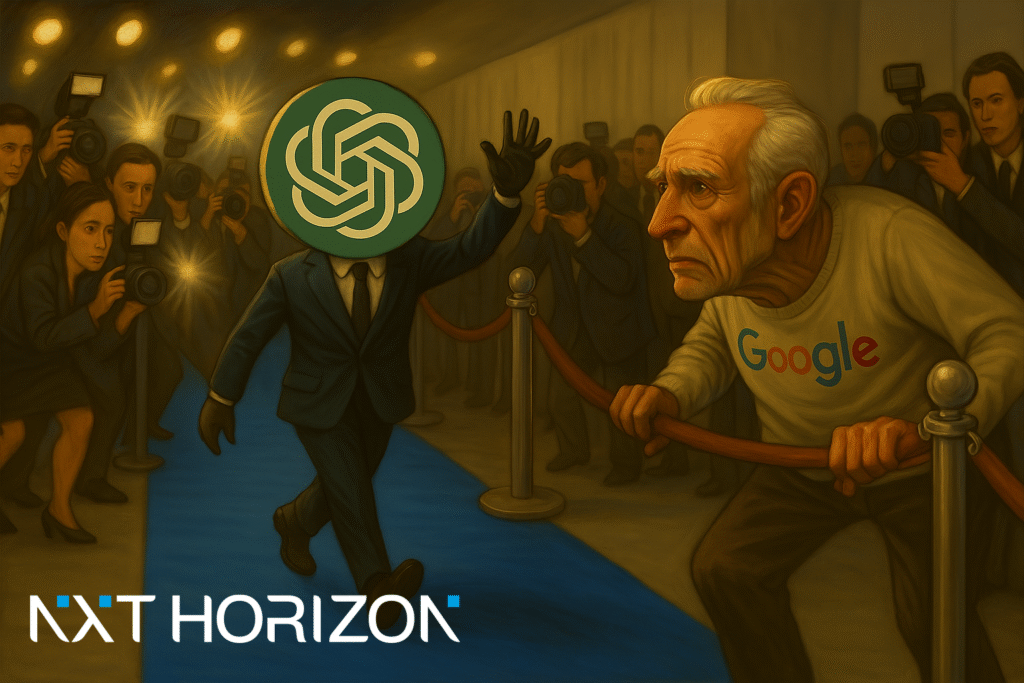
For 25 years, we’ve been told to “Google it.” That simple phrase defined an era—an era of search, of blue links, of democratised access to information. It was the gateway to the digital revolution, empowering billions to research, learn, and connect. But that era is ending.
We are now entering the Age of Answers.
Large Language Models (LLMs) like ChatGPT, Microsoft Copilot, Gemini, Claude, and others are not just tools—they are becoming our consultants, influencers, and decision-makers. They don’t just point us to information; they synthesise it, contextualise it, and deliver it in a conversational, human-like format. The implications are profound.
The Death of Search as We Know It
Search was once about visibility. If your brand ranked high, you won. SEO teams focused on keywords, backlinks, and metadata. But LLMs don’t operate on the same rules. They don’t return a list of links—they return an answer. And if your brand isn’t in that answer, you’re invisible.
This is the existential threat to Google’s dominance. As LLMs become the first stop for information, traditional search engines are losing relevance. Organic search traffic is forecasted to decline by 50% by 2028. The monopoly is cracking—not because of regulation, but because of innovation.
The Rise of the AI Consultant
LLMs are now influencing every stage of the customer journey. According to Revere, 89% of B2B buyers already use generative AI as a top source of self-guided information. These models are shaping brand perception, product discovery, and even purchase decisions.
And it’s not just about answers. We’re entering the Age of Agents—AI systems that don’t just advise but act. From booking travel to managing procurement, AI agents are beginning to execute tasks on our behalf.
“Generative AI provides us with a whole new toolbox that opens so many opportunities to simplify and improve our work lives.” Juergen Mueller, Chief Technology Officer, SAP SE
Why Revere AI Belongs in Your Tech Stack
In this new landscape, brands need more than visibility—they need performance. That’s where https://revere-ai.com/ comes in.
Revere is a brand intelligence platform built for the AI era. It helps companies measure, monitor, and optimise how their brand is represented across major LLMs like GPT-4o, Gemini, Claude, and Llama. Think of it as your AI-era SEO dashboard—except instead of rankings, you’re tracking brand sentiment, reach, and relevance in AI-generated answers.
Key features include:
- Revere Brand Index Score: A net promoter-style metric for LLMs that combines reach and sentiment.
- LLM Insights: Real-time benchmarking of your brand across multiple AI platforms.
- Actionable Optimisation: Strategic recommendations to improve how your brand shows up in AI conversations.
- Content Mapping: Identifies what content you need to create or refine to influence LLM outputs.
Revere isn’t just a tool—it’s a strategic asset. It gives CMOs, SEO teams, and content strategists the visibility and control they need to thrive in the Age of Answers.
Final Thoughts: Don’t Get Left Behind
We need to build a narrative, urgently ….about how LLMs are impacting business today. There is a serious lag-time between what marketing teams understand and what leadership needs to know. Most executives still view AI as a future trend, not a present reality.
But here’s the truth: if your brand isn’t being understood, surfaced, and recommended by LLMs, you’re already behind.
We need simple, measurable ways to assess whether your brand has:
- Relevance in AI-generated responses
- Voice that aligns with your positioning
- Clarity in how it’s interpreted by LLMs
Those that get this right will gain a significant competitive advantage. Those that don’t risk becoming invisible in the next wave of digital discovery.
The market is catching up. Slowly, then suddenly. Don’t wait too long to change.